Djarum Black Ruby vs. Cherry: The Evolution of the Clove Cigar
Is the flavor of a memory purely a matter of taste, or is it a byproduct of legal engineering? For the long-time enthusiast of Indonesian kreteks, the name "Djarum Black Cherry" evokes a specific era—the 1990s aesthetic of black paper wrappers and a scent that defined the alternative subculture. Today, however, the store shelves are occupied by a successor known as "Djarum Black Ruby." The transition from Cherry to Ruby is often dismissed as a mere branding exercise, yet for the serious connoisseur, it represents a deeper discontinuity in the sensory experience. This evolution was not born of creative whimsy but was forced by a rigorous, often adversarial dialogue between international manufacturers and American legislative bodies. Understanding the difference between these two iterations requires more than just a palate for wild cherry; it necessitates a dissection of the structural and chemical re-engineering that has redefined the modern "clove cigar" in the shadow of shifting federal and state regulations.
The Transition: From Paper Wrappers to Homogenized Tobacco Leaf
The core context of the Ruby versus Cherry debate begins with a single date: September 22, 2009. This was the day the Family Smoking Prevention and Tobacco Control Act (TCA) effectively banned paper-wrapped cigarettes containing "characterizing flavors." This mandate forced the Indonesian kretek industry to undergo an industrial metamorphosis. To remain legal in the United States, Djarum had to re-categorize its products from cigarettes to "filtered cigars." This was achieved by replacing the iconic black paper with Homogenized Tobacco Leaf (HTL). HTL is a "tobacco paper" composed of tobacco pulp and natural binders, meeting the legal definition of a cigar wrapper. This structural change is the primary reason users often perceive a "night and day" difference between the original Cherry cigarette and the modern Ruby cigar. The HTL wrapper burns hotter and provides a heavier, earthier tobacco base that competes with the delicate cherry notes, a technical reality discussed in our guide on clove cigarettes vs clove cigars.
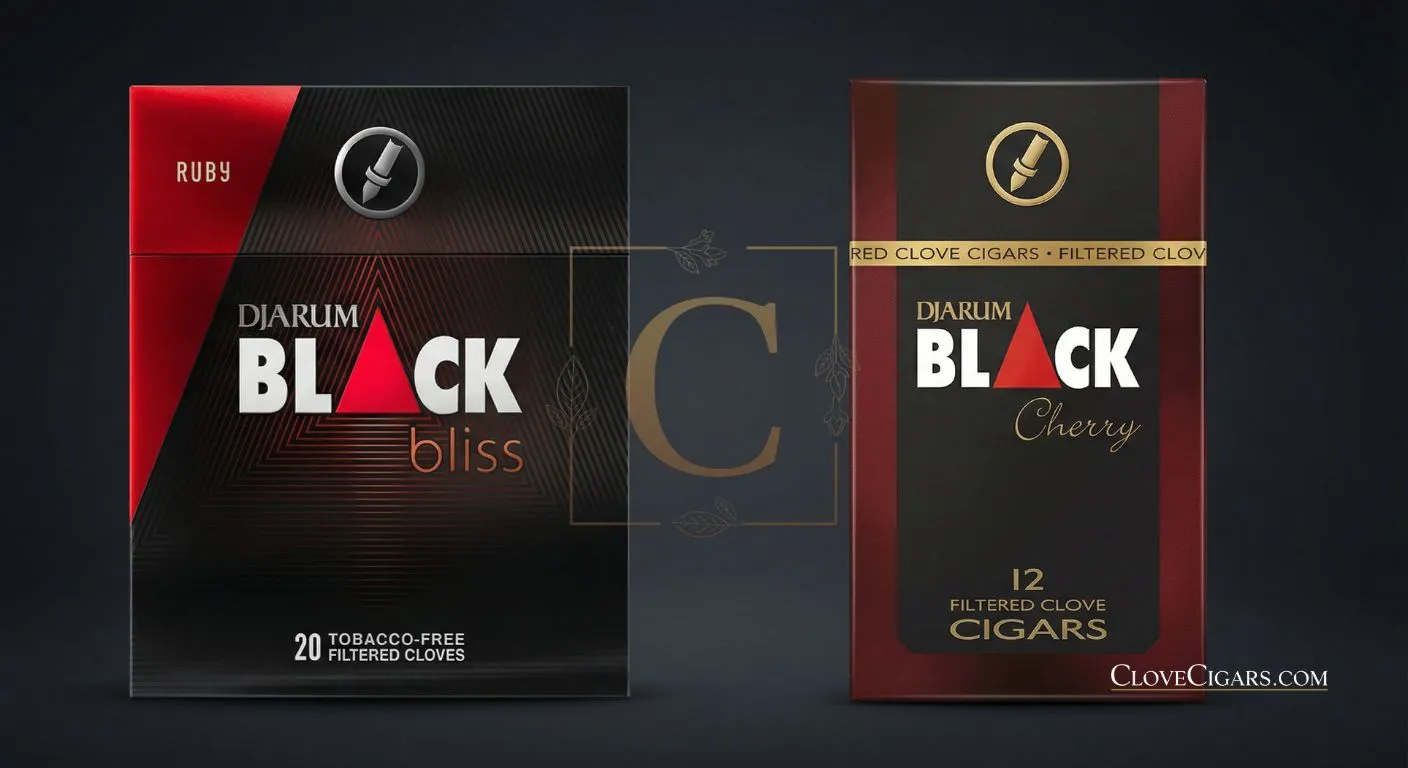
The Branding Mystery: Why "Ruby" Replaced "Cherry"
The controversy surrounding the "Ruby" name is often tied to the FDA’s scrutiny of fruit-flavored tobacco products. While the 2009 ban applied strictly to cigarettes, the agency has maintained a continuous interest in "characterizing flavors" in cigars, particularly those with names that might be perceived as appealing to youth. Branding shifts like the transition from "Djarum Spice Island" to "Djarum Black Cherry" and finally to "Djarum Black Ruby" reflect a strategic pivot toward more abstract, premium-sounding identifiers. Ruby acts as a "matured" branding vessel; it signals the red-fruit profile without using the explicit "candy-like" nomenclature that attracts regulatory heat. However, for the consumer, this semantic shift created a fragmentation of identity. Many purists argue that the "Ruby" profile is "darker" and less sweet than the original Cherry. This is not purely psychological; when the branding changed, manufacturers also had to adjust the "sauce"—the proprietary mixture of spices and fruit extracts—to balance against the more robust flavor profile of the newly mandated tobacco leaf wrapper.
The Sensory Connection: Kretek Sauce and the Numbing Crackle
Despite the branding and structural changes, Djarum Black Ruby remains deeply connected to the ethnomedicinal roots of the Indonesian kretek. The defining characteristic is the presence of eugenol, the primary constituent of clove oil (Syzygium aromaticum). Eugenol provides the signature "crackle" during combustion—a result of fluid dynamics where pockets of oil flash-boil and rupture cellular structures. It also provides a local anesthetic effect, numbing the throat and masking the heat of the HTL wrapper. This numbing sensation is why a harsher, heavier smoke can still feel "smooth" to the user. The Ruby variant enhances this with a specific "sauce" that emphasizes sweet, tart cherry notes over the earthier spice of the Djarum Special. For enthusiasts seeking to experience this iconic blend of spice and fruit, the option to buy Djarum Black clove cigarettes (sold as filtered cigars in the US) remains the primary way to access the Indonesian heritage in a compliant format.
Analysis & Insight: Why Ruby is Not "Just" Cherry
To view the Ruby as a simple rename of the Cherry is to ignore the organoleptic reality of tobacco combustion. In the original paper-wrapped format, the cherry flavoring was the dominant aromatic note, supported by the clean burn of the paper. In the modern Ruby cigar, the cherry flavor must work in tandem with the "toasted" notes of the HTL wrapper. This creates a more complex, albeit heavier, experience. Some users report that Ruby tastes "pepperier" or "woodier." This is likely due to the interaction between the fruit-heavy sauce and the increased particulate matter from the tobacco wrapper. Furthermore, Djarum Black Ruby is often compared to other bold variants in the market, such as the Marlboro Filter Black vs Djarum Black comparison, where the intensity of the "sauce" is the deciding factor for many smokers. The Ruby is designed for a longer, slower burn—a characteristic of cigars that changes the nicotine delivery rate compared to the faster-burning cigarettes of the 1990s.
Modern Relevance: 2026 Bans and the Herbal Pivot
The relevance of the Ruby versus Cherry debate is reaching a critical juncture in 2025 and 2026. As states like California implement "Unflavored Tobacco Lists" (UTL), products with any characterizing flavor—regardless of whether they are called Ruby or Cherry—face a total retail ban. This has led to the development of Djarum Bliss Ruby, a tobacco-free and nicotine-free alternative. Djarum Bliss uses a botanical blend of tea and fig leaves to preserve the clove scent and the cherry flavor without the legal restrictions placed on tobacco products. This "herbal pivot" represents the next stage in the product's evolution, moving the category from re-categorization to total substitution. For those navigating these complex local restrictions, our analysis of clove cigarettes state-by-state legality provides the necessary roadmap. The transition from Cherry to Ruby was the first adaptation; the shift from tobacco to herbal Bliss may be the final survival strategy for the clove flavor profile in America.
In conclusion, the evolution of Djarum Black Ruby from the original Cherry represents a decade-long journey of industrial adaptation. The change was not just in the name, but in the very material of the smoke itself, moving from paper to homogenized tobacco leaf to meet the mandates of the Family Smoking Prevention and Tobacco Control Act. While the name Ruby may sound like a marketing flourish, it is a marker of a product that has been legally hardened and chemically recalibrated for a more restrictive era. Whether one prefers the nostalgia of the 1990s Cherry or the robust, cigar-like profile of the modern Ruby, understanding the technical and regulatory forces at play is essential for any modern connoisseur. For more on the history of this shift, explore our detailed look at why Djarum became a cigar, which provides the final piece of the puzzle in the story of the world’s most resilient clove brand.