Importing Clove Cigarettes into the US: A Guide to Customs and Legal Risks
Is the allure of an authentic Indonesian kretek worth the risk of a federal seizure? Since the 2009 federal ban on flavored cigarettes, American enthusiasts have found themselves in a difficult position, caught between a desire for the original paper-wrapped clove experience and a domestic market that only permits tobacco-wrapped "filtered cigars." This longing has fueled a persistent gray market of international mail-order vendors. However, importing these products into the United States is no longer a simple matter of paying duties. In 2025 and 2026, the intersection of the PACT Act, aggressive Customs enforcement, and evolving state whitelists has made the act of importing clove cigarettes a high-stakes legal gamble. For the modern consumer, understanding the rigorous, often adversarial, dialogue between international trade and federal regulation is essential to avoid the common pitfalls of the "customs cliff."
The Regulatory Foundation: The PACT Act and USPS Restrictions
The primary legal instrument governing the importation of clove cigarettes is the Prevent All Cigarette Trafficking (PACT) Act of 2010. This act fundamentally transformed the landscape by prohibiting the United States Postal Service (USPS) from accepting or delivering any package containing cigarettes or smokeless tobacco to consumers. While narrow exceptions exist for small "gift" shipments between individuals, commercial business-to-consumer (B2C) sales are largely banned. Furthermore, private carriers like FedEx and UPS have implemented voluntary bans on shipping tobacco products to residential addresses to avoid the complex reporting and age-verification requirements of the act. Consequently, even if a vendor in Indonesia is willing to ship, the delivery mechanism itself is legally restricted within the U.S. borders, creating a significant barrier for those seeking authentic products like the original Djarum Black cigarettes.
Customs Enforcement: Operation Mega Flex and Seizure Risks
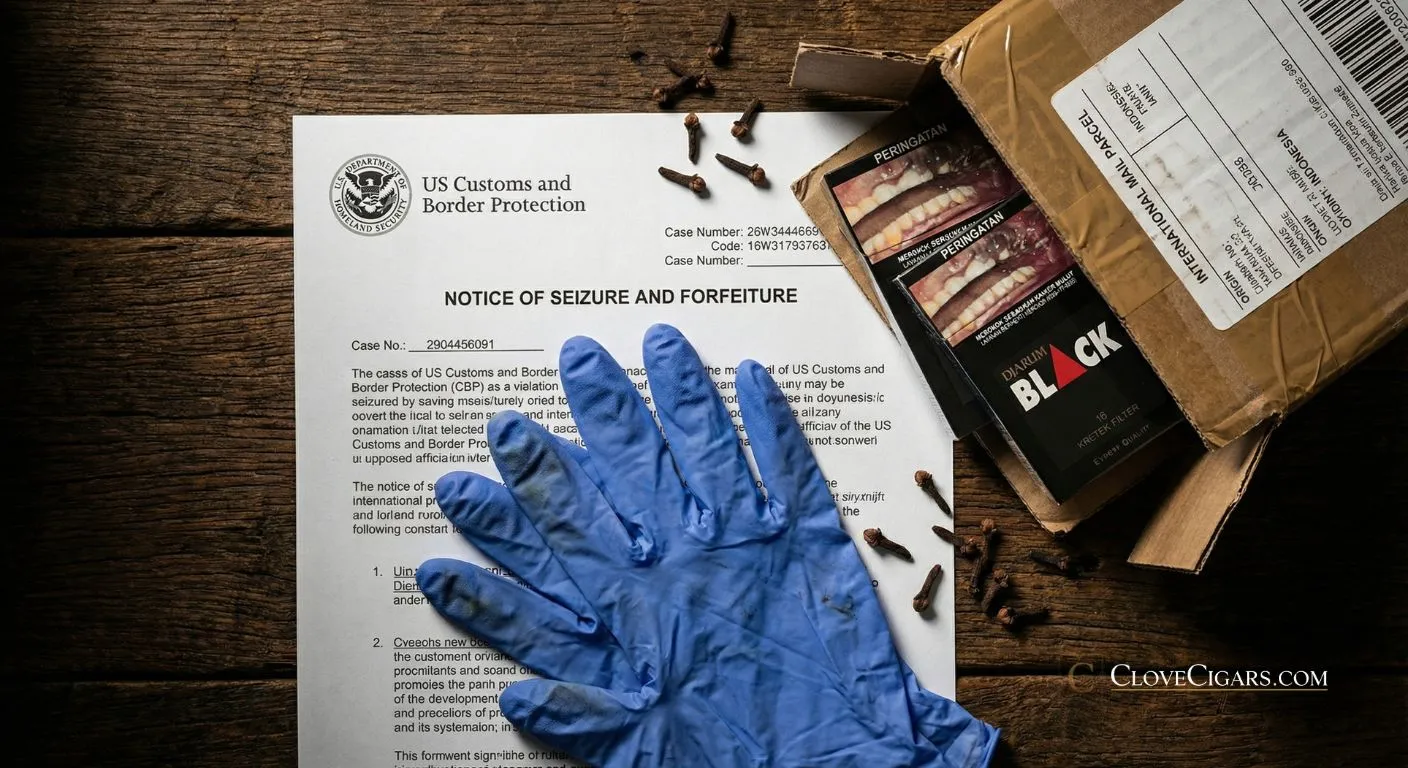
For those who attempt to bypass domestic shipping bans by ordering from overseas, the risk shifts to US Customs and Border Protection (CBP). Under "Operation Mega Flex," the CBP actively targets illicit tobacco and vaping shipments entering the U.S. through international mail facilities and express consignment hubs. Research indicates that shipments from Southeast Asia are subject to high-intensity screening. When a shipment of clove cigarettes is intercepted, it is typically seized, and the recipient receives a formal "Notice of Seizure." Because the products violate the Family Smoking Prevention and Tobacco Control Act’s ban on flavored cigarettes, there is effectively no legal recourse for the consumer. Ordering from overseas carried a high risk of total financial loss with no possibility of a refund, a reality that differentiates the modern market from the more permissive era of the 1990s.
Personal Use Exemptions: Travelers vs. Mail-Order
There is a critical distinction between mailing tobacco and carrying it through a port of entry. Under the Harmonized Tariff Schedule (HTS) Code 2402, travelers entering the United States are typically granted a personal exemption limit. This usually allows for 200 cigarettes (one carton) or 100 cigars to enter duty-free for personal use. However, this exemption applies only to travelers; it does not extend to mailed shipments. For the few who legally import for personal use while traveling, the products are still technically subject to FDA labeling and flavor regulations, though personal quantities for individual consumption are often given more leeway than commercial volumes. For those unable to travel, the domestic alternative remains the "clove cigar," which circumvents the definition of a cigarette by using a tobacco-based wrapper, a transition explained in our guide on clove cigarettes vs clove cigars.
The Science of Choice: Why the Risk Exists
The motivation for navigating these risks is rooted in the chemistry of the kretek. The original Indonesian cigarette uses a neutral paper wrapper and a specific "sauce" marinated with high-potency Javanese tobacco and ground cloves. The resulting smoke is defined by eugenol—the primary constituent of clove oil—which acts as a local anesthetic. This numbs the throat, creating a "smoothness" paradox where a chemically aggressive smoke feels milder, allowing for deeper inhalation. Many enthusiasts feel that the US-legal filtered cigars, which use Homogenized Tobacco Leaf (HTL) wrappers, introduce a heavier, earthier taste that masks the delicate spice of the original blend. For those seeking the iconic clove experience without the customs risk, you can buy Djarum Black through international connoisseur channels, but you must do so with a full understanding of the shipping barriers involved.
Analysis & Insight: The 2026 Regulatory Minefield
Looking toward 2026, the legal pathway for clove products is narrowing even further due to state-level mandates. In states like California, the "Unflavored Tobacco List" (UTL) mandate effectively bans the retail sale of any flavored tobacco product, including clove-wrapped cigars. This has led to the emergence of tobacco-free alternatives like Djarum Bliss, which utilize tea and fig leaves to preserve the clove scent and "crackle" without triggering the PACT Act or tobacco-specific flavor bans. For many, this "herbal pivot" represents the only viable future for the category in a prohibitionist environment. Consumers should consult our clove cigarettes state-by-state legality guide to understand how local restrictions might lead to even higher scrutiny of international parcels arriving at their doorstep.
Conclusion: Navigating the Twilight of Importation
The era of the "legal loophole" for importing original Indonesian clove cigarettes is effectively over. While the scent of the kretek continues to evoke the alternative subcultures of the 1990s, the modern regulatory landscape is designed to suppress the movement of flavored tobacco across borders. Between the PACT Act’s shipping prohibitions and the CBP’s aggressive "Operation Mega Flex," the financial and legal risks of mail-order importation often outweigh the sensory benefits. Ultimately, the future of clove culture in America lies in the evolution of legal filtered cigars and the innovative "herbal" substitutes that preserve the tradition's soul without the leaf. By staying informed on the Family Smoking Prevention and Tobacco Control Act, enthusiasts can better navigate this complex market while respecting the boundaries of the current law.