Clove Cigarettes vs. Menthol Cigarettes: A Study in Sensory and Regulatory Divergence
In the landscape of flavored tobacco, two profiles have historically dominated the sensory experience of the American smoker: the cooling crispness of menthol and the warm, numbing spice of the clove. While both categories utilize botanical extracts to alter the harshness of tobacco smoke, their paths in the United States have been defined by a stark, often adversarial, regulatory divide. Why was one flavor permitted to thrive in the domestic market while the other was effectively legislated into a niche category of "filtered cigars"? This divergence is not merely a matter of consumer taste, but a reflection of a complex dialogue between public health policy, international trade disputes, and the distinct pharmacological interactions of menthol and eugenol. As we navigate the tightened regulations of 2025 and 2026, understanding the fundamental differences between these two "characterizing flavors" is essential for any informed reader seeking to demystify the current state of the kretek in America.
The Pharmacological Foundation: Menthol vs. Eugenol
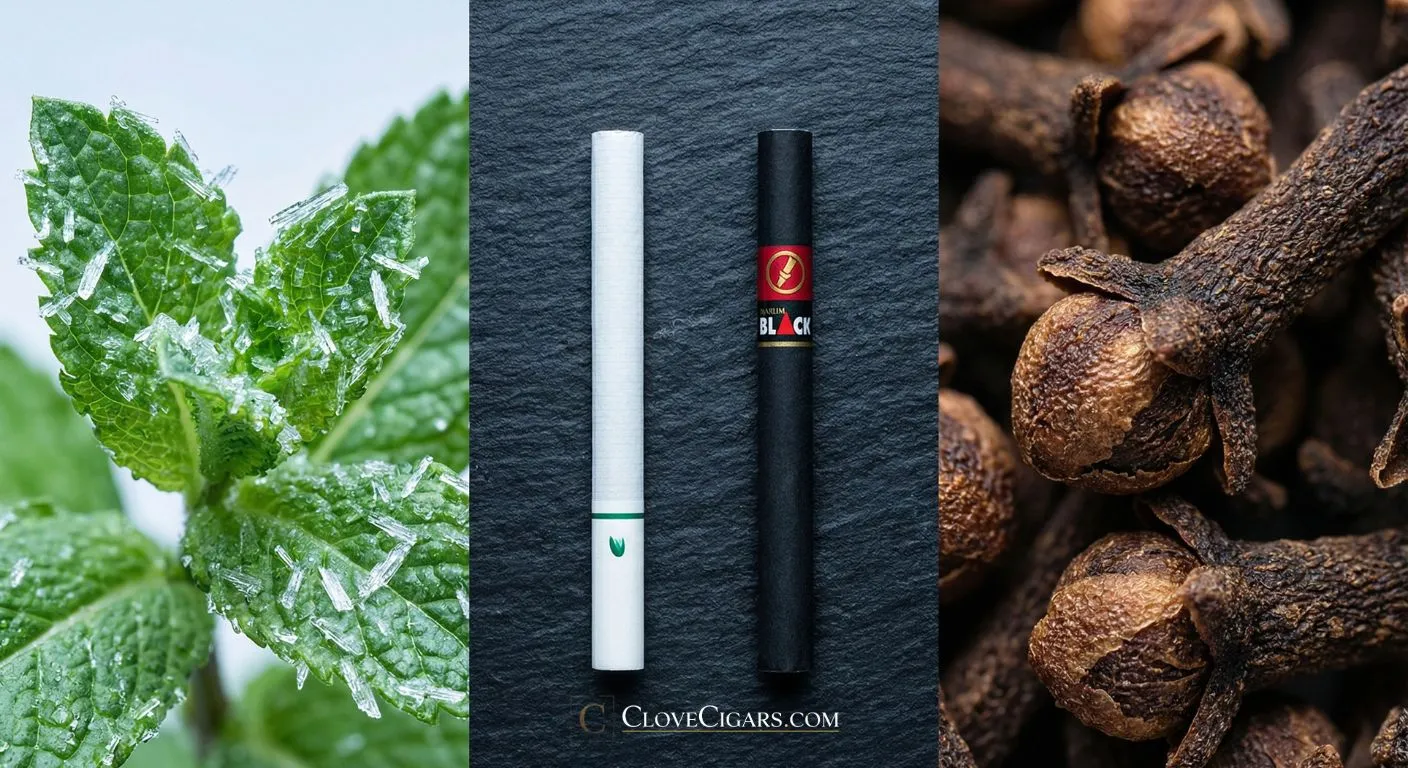
At the chemical level, the difference between menthol and clove cigarettes begins with the interaction between their primary constituents and the human nervous system. Menthol, a compound derived from peppermint or other mint oils, triggers the TRPM8 receptors in the mouth and throat, which the brain interprets as a "cooling" sensation. In contrast, the clove cigarette—or kretek—relies on eugenol (4-allyl-2-methoxyphenol), which comprises up to 90% of clove oil. Eugenol does not merely cool; it acts as a local anesthetic by inhibiting nerve impulse conduction, a mechanism similar to lidocaine. This results in a physical numbing of the mucous membranes, a phenomenon that allows the smoker to inhale deeply without the natural rejection response of a cough or gag reflex. While menthol masks the harshness of smoke through temperature perception, cloves achieve "smoothness" through temporary anesthesia, creating a unique sensory paradox where a chemically aggressive smoke feels exceptionally mild to the user.
The 2009 Watershed: The Menthol Loophole and the Clove Ban
The modern history of these two categories was permanently altered on September 22, 2009, by the Family Smoking Prevention and Tobacco Control Act (TCA). Section 907(a)(1)(A) of this act explicitly banned cigarettes containing characterizing flavors, specifically listing clove, strawberry, and grape. However, menthol was granted a specific exemption, a decision influenced by heavy lobbying from domestic tobacco manufacturers. This "menthol loophole" created a profound legal tension, leading Indonesia to challenge the United States at the World Trade Organization (WTO). Indonesia argued that clove and menthol cigarettes were "like products"—both flavored and both appealing to younger demographics—and that banning one (imported) while permitting the other (domestic) violated international trade agreements. Although the WTO eventually ruled in favor of Indonesia, the U.S. ban on clove cigarettes remained intact, forcing the category to pivot toward the "filtered cigar" model to remain legal.
Sensory Profiles: Incense-Like Warmth vs. Minty Crispness
The olfactory experience of a clove cigarette is significantly more robust and lingering than that of a menthol cigarette. The scent of a kretek is often described as incense-like, sweet, and spicy, a result of the "sauce"—a proprietary mixture of fruit extracts, spices, and sugar marinated with the tobacco and cloves. This aroma is so distinct that it allowed clove smokers in the 1990s to signal their presence within alternative subcultures, such as the Goth scene. Menthol, by comparison, provides a cleaner, sharper olfactory footprint that is primarily confined to the immediate vicinity of the smoker. Furthermore, the physical "crackle" of a kretek—caused by pockets of clove oil flash-boiling and rupturing at temperatures exceeding 800°C—provides an auditory dimension that is entirely absent in the silent burn of a menthol cigarette. Those interested in the specific auditory and sensory allure of the crackle can find it in products like the Djarum Black, which maintains the traditional Indonesian sauce even in its US-legal cigar format.
Analysis & Insight: The Bronchodilatory Paradox
Beyond taste, the pharmacological effects of these two flavors impact how nicotine is absorbed. Eugenol is believed to have bronchodilatory properties, potentially relaxing the airways and allowing for even deeper inhalation of smoke than menthol. This interaction explains the potent "buzz" often reported by clove smokers, which is actually a combination of high-nicotine Indonesian tobacco and the enhanced absorption facilitated by the eugenol. In contrast, while menthol also facilitates deeper inhalation, it lacks the specific anesthetic potency of the clove. This technical distinction is why the transition from paper-wrapped cigarettes to the heavier clove-wrapped filtered cigars was so jarring for consumers; the heavier tobacco leaf wrapper introduced an earthiness that shifted the delicate balance between the eugenol's numbing effect and the tobacco's natural harshness.
Modern Relevance: The 2026 Regulatory Convergence
As we enter 2026, the historical gap between menthol and clove regulation is finally closing, particularly at the state level. California’s Unflavored Tobacco List (UTL) now effectively treats all flavored products—including menthol and clove—with the same scrutiny. Since Djarum Black cigars are explicitly flavored, they are excluded from the retail whitelist in California, placing them in the same prohibited category as menthol cigarettes in many jurisdictions. This regulatory convergence is driving the industry toward the "herbal pivot," represented by nicotine-free and tobacco-free products like Djarum Bliss. These alternatives aim to preserve the aromatic "sauce" and the iconic crackle without triggering the specific legal definitions that have plagued the category since 2009. For a deeper look at how these products are categorized today, our guide on clove cigarettes state-by-state legality provides the necessary context for the modern smoker.
Conclusion: Resolving the Flavor Conflict
The comparison between clove and menthol cigarettes reveals a narrative of two flavors that, despite their sensory similarities, were treated as polar opposites by the American legal system. While menthol enjoyed a decades-long exemption that allowed it to remain a mainstream commodity, cloves were forced through a rigorous re-engineering process, surviving only as "filtered cigars" or herbal substitutes. Today, the numbing anesthesia of eugenol and the cooling crispness of menthol are both facing a future of increased prohibition and retail whitelists. According to the Family Smoking Prevention and Tobacco Control Act, the era of the flavored cigarette has reached its end, leaving only the specialized repositories of the "sauce" and the "crackle" to carry the tradition forward. For the connoisseur, the takeaway is clear: whether one prefers the mint of the West or the spice of the East, the future of flavor in smoke now lies in the innovation of herbal alternatives and the careful navigation of the specialized cigar market.