Are Clove Cigarettes Safe? A Rigorous Toxicological Evaluation
In the discourse surrounding specialty tobacco, the Indonesian kretek occupies a precarious position: is it a "natural" alternative to industrial cigarettes, or a chemically aggressive product with unique respiratory risks? For decades, the sweet, incense-like aroma of clove cigarettes has fostered a misconception among some consumers that the presence of botanical matter—specifically cloves—renders the smoke less harmful than that of conventional "white" cigarettes. However, this perceived safety is often a sensory deception created by the product's own chemistry. As we navigate the complex regulatory and health landscape of 2026, it is essential to establish a foundational source of truth regarding the safety of clove products. By dissecting the toxicology of eugenol, the mechanism of the numbing effect, and the comparative yields of tar and carbon monoxide, we can evaluate whether the "safety" of the kretek is a legitimate claim or a dangerous pharmacological paradox.
The Smoothness Paradox: Anesthesia as a Mask for Irritation
The primary safety concern regarding clove cigarettes is not necessarily what the smoker feels, but what they do not feel. The defining characteristic of the kretek is the presence of eugenol, the primary chemical constituent of clove oil, comprising 70-90% of the extract. Eugenol acts as a potent local anesthetic, similar in mechanism to lidocaine. When inhaled, it numbs the mucous membranes of the mouth, throat, and trachea. This numbing effect suppresses the body's natural gag and cough reflexes—the very mechanisms designed to protect the lungs from foreign particles and acrid smoke. Consequently, a smoker can inhale more deeply and hold the smoke longer without the typical rejection response, a phenomenon known as the "smoothness paradox". This sensory deception may lead to a higher intake of toxins than would be possible with a standard cigarette.
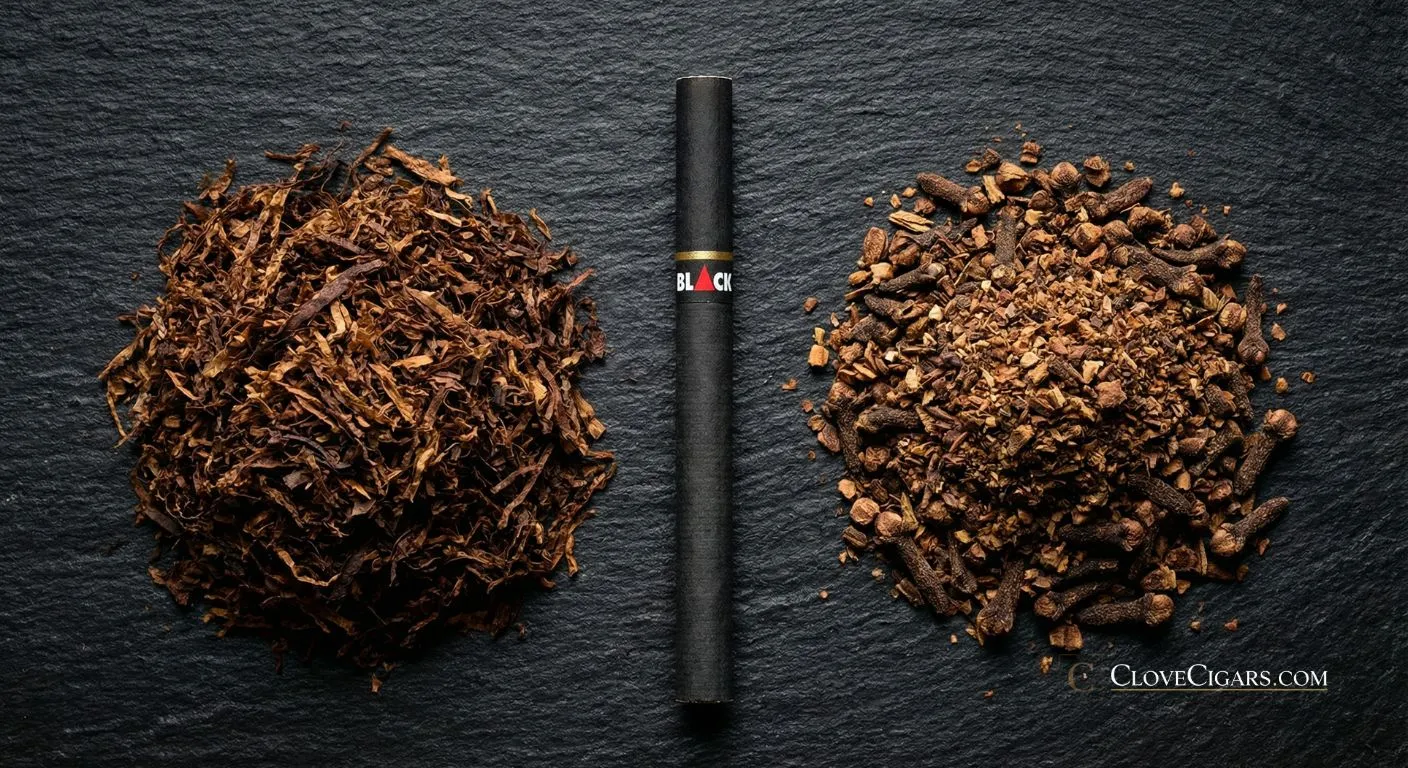
Comparative Toxicology: Clove Smoke vs. Conventional Cigarettes
Contrary to the "natural" image sometimes associated with herbal products, research indicates that kretek smoke is chemically aggressive and often more potent than conventional tobacco smoke. The combustion of clove oil adds significant particulate matter to the smoke yield. Data synthesized from toxicological studies reveals that clove cigarettes typically yield higher levels of tar, nicotine, and carbon monoxide (CO) than standard cigarettes. The dense packing of the tobacco and the addition of the "sauce"—a proprietary mixture of fruit extracts and spices—further reduces burn efficiency, leading to increased CO production. Furthermore, the unique toxicological profile of eugenol itself presents risks not found in white cigarettes, with eugenol yields ranging from 2,490 to 37,900 µg per cigarette.
Respiratory Risks: Lung Injury and Aspiration Pneumonia
The interaction between eugenol and the respiratory system is complex and potentially hazardous. Studies have shown that the inhalation of eugenol can cause acute lung injury (ALI) and pulmonary edema in animal models. While eugenol has anti-inflammatory properties when ingested, its pyrolysis products—the chemicals created when it is burned—can be cytotoxic to lung fibroblasts. A significant clinical risk is aspiration pneumonia; by suppressing the cough reflex, eugenol can allow a smoker to inhale foreign particles or gastric contents without the body's natural rejection response. Furthermore, the combustion of eugenol generates acrid smoke and respiratory irritants that are distinct from those produced by pure tobacco combustion. This evidence challenges the notion of the kretek as a milder alternative, as discussed in our guide on why clove cigarettes make your throat numb.
Connection to Kretek Culture: The Historical Health Myth
The origins of the kretek were actually rooted in a search for respiratory relief. In the 1880s, Haji Jamhari of Kudus, Java, mixed cloves into his tobacco to treat asthma, reporting that the numbing eugenol helped his symptoms. This origin story led to the product being sold in pharmacies as a medicine rather than a recreational drug. This historical context has contributed to a persistent, though scientifically unsupported, belief in the "medicinal" quality of the smoke. For those seeking the iconic clove aroma without the tobacco-related health risks, the market has pivoted toward products like Djarum Black in filtered cigar form or the emerging herbal alternatives that prioritize the "sauce" and scent over the tobacco leaf.
Analysis & Insight: The Impact of the HTL Wrapper
The safety profile of the clove product changed significantly following the 2009 federal ban, which forced a transition from paper-wrapped cigarettes to "filtered cigars". These cigars utilize Homogenized Tobacco Leaf (HTL) wrappers—a material made from tobacco pulp and binders. HTL is thicker and burns at a different temperature than neutral paper, altering the taste and potentially the particulate yield of the smoke. This re-engineering, while legally necessary, introduced a heavier, earthier taste profile that users often perceive as "stronger" or "harsher". For a deeper look at this structural change, consult our analysis of clove cigarettes vs clove cigars.
Modern Relevance: The 2026 Regulatory Cliff and Herbal Substitutes
As we move into 2026, the regulatory landscape is shifting from re-categorization to total substitution. In states like California, traditional flavored clove cigars are facing retail bans due to the "Unflavored Tobacco List" (UTL) mandate. This has led to the rise of tobacco-free and nicotine-free alternatives like Djarum Bliss, which utilize botanical blends of tea and fig leaves. While these products remove the specific risks of nicotine and tobacco, researchers note that the combustion products of any botanical matter still present health risks, including tar and carbon monoxide. For enthusiasts navigating these local restrictions, our guide on clove cigarettes state-by-state legality provides the necessary roadmap for safe and legal procurement.
Conclusion: Resolving the Safety Paradox
Ultimately, the answer to whether clove cigarettes are "safe" is a definitive no; they are a specialized tobacco product with a unique and potentially more aggressive risk profile than conventional cigarettes. The numbing anesthesia of eugenol is a double-edged sword: it provides the signature smooth experience of the kretek while masking the body's natural warnings against deep inhalation of tar and carbon monoxide. From the 19th-century asthma remedies of Haji Jamhari to the modern filtered cigars and herbal Bliss, the "soul" of the product has always been the clove and its complex chemistry. By understanding the toxicological reality behind the "crackle" and the "numbness," consumers can make informed choices as the category continues to redefine itself in the prohibitionist environment of 2026. For more on the science of the smoke, explore our FAQ on why do clove cigarettes crackle.