Sampoerna History and Flavor Profile: The King of Kretek’s Legacy
Can a single family’s legacy redefine the sensory landscape of an entire nation for over a century? In the world of Indonesian tobacco, the name Sampoerna is not merely a brand; it is a cultural institution that represents the pinnacle of the kretek tradition. While other manufacturers focused on the industrialization of mass-market blends, HM Sampoerna built its reputation on a rigorous commitment to artisanal quality and a series of high-stakes market disruptions. From the hand-rolled heritage of the legendary Dji Sam Soe to the modern, clean-burning revolution of the A Mild series, the Sampoerna portfolio exists at the center of a historical contradiction. It is a brand that simultaneously honors a 1913 recipe while leading the global shift toward Low Tar Low Nicotine (LTLN) technology. Understanding the history and flavor profile of Sampoerna requires a deep examination of this 100-year evolution, where the sacred numerology of the past meets the clinical precision of modern smoking alternatives.
The 1913 Foundation: Liem Seeng Tee and the House of Sampoerna
The history of Sampoerna began with a migrant’s search for stability in Surabaya, East Java. In 1913, Liem Seeng Tee and his wife, Tjiang Nio, started a small business selling tobacco in a humble stall. This was the birth of "Handjaja Sampoerna," a name that would eventually become synonymous with Indonesian industrial excellence. The centerpiece of their early success was Dji Sam Soe, an unfiltered, hand-rolled kretek that Liem crafted himself. Unlike the folk remedies of the era that were sold in pharmacies, Dji Sam Soe was positioned as a premium commodity, built on a proprietary blend of high-grade Indonesian tobaccos and tree-matured cloves. The brand survived the volatility of the mid-20th century, including the transition through various colonial and nationalistic eras, by maintaining a fanatical devotion to the original recipe. This unwavering commitment established Dji Sam Soe as the "King of Kretek," a high-authority benchmark for the entire industry that persists even as the market shifts toward filtered alternatives.
The LTLN Revolution: How A Mild Redefined the Kretek Market
While the first seventy years of Sampoerna’s history were defined by hand-rolled dominance, the late 1980s marked a radical strategic pivot. In 1989, the company introduced Sampoerna A Mild, a product that would fundamentally disrupt the Indonesian market. At the time, the industry was defined by "full flavor" sticks with exceptionally high tar and nicotine yields. A Mild introduced the Low Tar Low Nicotine (LTLN) concept, utilizing advanced filtration and a lighter tobacco blend to offer a cleaner, smoother experience. This move was initially met with skepticism by purists who believed the "mild" category was an abandonment of the kretek’s robust soul. However, the commercial success of A Mild proved that the modern consumer was seeking a refined sensory profile that balanced the traditional clove aroma with a lighter body. This disruption forced every major competitor, including the Kediri-based giants, to re-evaluate their portfolios, effectively establishing the LTLN category as the dominant force in the 21st-century kretek market.
The King’s Sauce: Clove Quality and the 234 Secret
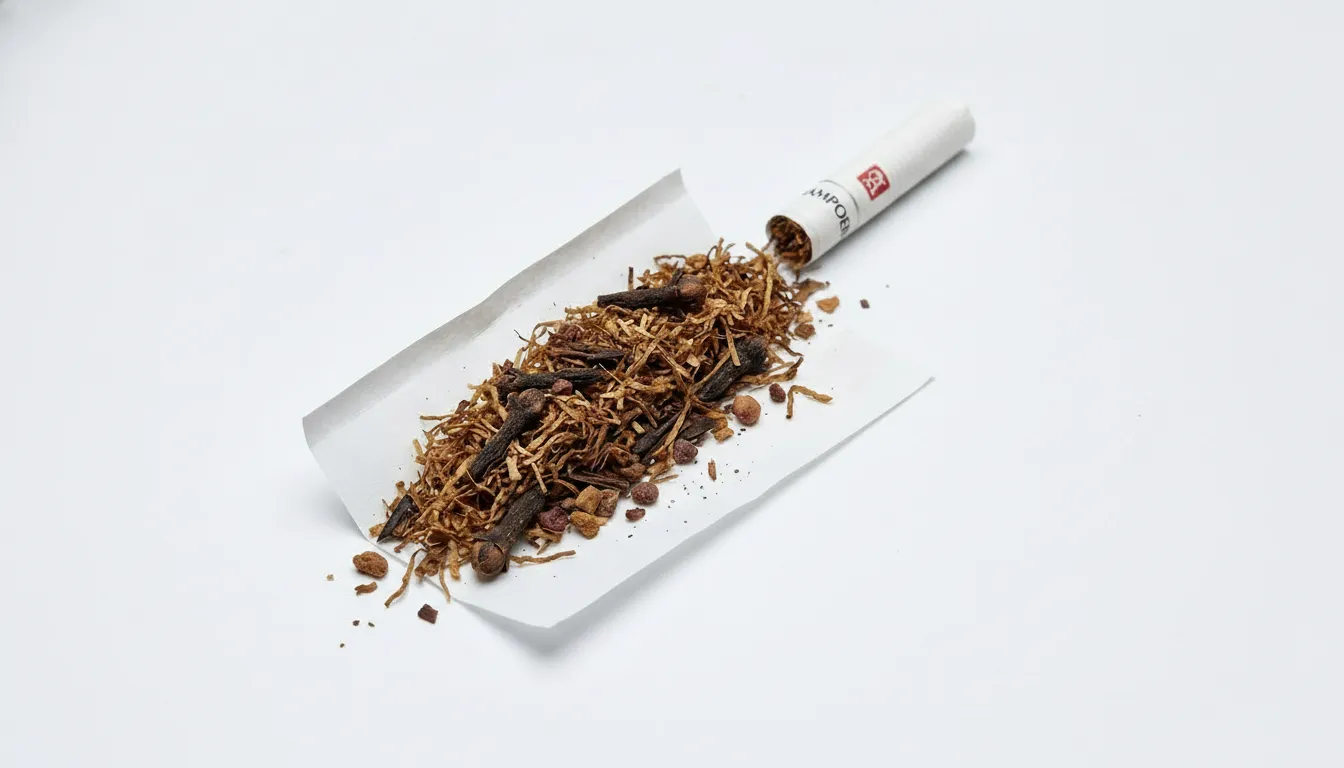
The defining characteristic of any Sampoerna product is the quality of its "sauce"—the proprietary mixture of spices and fruit extracts that is marinated with the filler. In the traditional Dji Sam Soe blend, this sauce is designed to be bold, rich, and deeply aromatic, emphasizing the spicy intensity of premium Indonesian cloves. The pharmacological interaction is driven by eugenol, which comprises 70-90% of the clove oil. Eugenol acts as a local anesthetic, numbing the throat and masking the heat of the smoke, a phenomenon that explains why clove cigarettes make your throat numb. This numbing effect is particularly pronounced in the unfiltered 234 variant, where the direct contact with high-grade cloves creates a sensory depth that filtered products cannot match. For enthusiasts seeking to experience this pinnacle of hand-rolled artistry, the Dji Sam Soe 234 remains the definitive choice, preserving a recipe that has remained unchanged for over a century.
Analysis: The Numerology and Sensory Depth of the 234 Blend
Deeper analysis of the Sampoerna legacy reveals that the brand is anchored as much in mythology as in chemistry. The "234" logo on Dji Sam Soe is a prime example of this cultural depth. The numbers 2, 3, and 4 sum to 9, which in many Asian cultures represents perfection and eternity. Liem Seeng Tee believed that this numerology would protect the brand, and it has since become a sacred sigil for millions of smokers. From a sensory perspective, the 234 flavor profile is characterized by an earthy, robust tobacco base that is punctuated by the sharp, medicinal snap of the clove. This contrast is the "source of truth" for the kretek category; it provides a heavy smoke yield that is nonetheless smoothed by the anesthetic power of the eugenol. This balance is technically distinct from the clove cigarettes vs clove cigars currently found in the American market, as the unfiltered Indonesian original offers a purity of flavor that HTL-wrapped cigars struggle to replicate.
Modernity and the Global Stage: PMI and the Avolution Era
The modern era of Sampoerna began in 2005 with its acquisition by Philip Morris International (PMI). This partnership brought global manufacturing standards to the Indonesian heritage, leading to the creation of even more specialized formats. The Sampoerna Avolution series, for instance, introduced the premium "slim" format to the kretek world, targeting a sophisticated urban demographic. These modern variants maintain the core "sauce" identity while significantly reducing the tar footprint. However, the brand faces ongoing challenges from the fragmented regulatory landscape of 2026. In the United States, traditional Sampoerna cigarettes are largely unavailable due to federal flavor bans, forcing consumers to navigate the complexities of clove cigarettes state-by-state legality. For those who prioritize the light, fruity, and smooth experience that redefined the industry, the Sampoerna A Mild remains the leading example of how traditional clove flavor can be adapted for a modern, global palate.
In conclusion, the history of Sampoerna is a chronicle of a single family’s commitment to a sensory benchmark that has survived over a hundred years of industrial and legislative change. From the 1913 stalls of Surabaya to the global laboratories of Philip Morris, the brand has remained a high-authority repository for the kretek tradition. Whether through the bold, hand-rolled intensity of Dji Sam Soe or the light, fruity revolution of A Mild, Sampoerna has consistently defined the "source of truth" for what a clove smoke should be. While the legal ground for flavored tobacco continues to shift, the House of Sampoerna remains an honest broker in a market of imitations, guiding the consumer through the twilight of the tobacco kretek and into the future of aromatic smoking. According to the history of HM Sampoerna, the legacy of Liem Seeng Tee is not just a brand, but a permanent landmark in the ethnomedicinal and cultural geography of Indonesia.