Djarum Clove Products: Navigating the Global Face of the Indonesian Kretek
Is it possible for a brand to become so synonymous with a category that its survival defines the survival of the category itself? In the specialized world of the Indonesian kretek, Djarum represents more than just a manufacturer; it is the global vessel through which the culture of clove-scented smoke is transmitted to the West. However, the contemporary landscape for Djarum clove products is characterized by a profound historical and regulatory contradiction. While the brand’s aesthetic—most notably the sleek Djarum Black—remains a totem of alternative identity, its internal architecture has been forced through a series of radical metamorphoses. From the medicinal origins in the volcanic heart of Kudus to the adversarial dialogue with federal regulators in 2026, the story of Djarum is a study in industrial resilience. To understand the current product lineup is to understand a category that has been legally transmuted, culturally redefined, and chemically re-engineered to navigate a world that increasingly views characterizing flavors as a legislative threat.
The Kudus Foundation and the Philosophy of the Sauce
The history of Djarum clove products is rooted in the 19th-century search for respiratory relief in Central Java. The kretek was originally an ethnomedicinal artifact, credited to Haji Jamhari, who in the 1880s mixed dried clove buds with tobacco to alleviate chronic asthma. The industrialization of this folk remedy was formalized by figures like M. Nitisemito, but it was Oei Wie Gwan who, in 1951, established Djarum in the town of Kudus. The "Djarum" (needle) brand was built upon a specific manufacturing philosophy centered on the "sauce"—a proprietary, often secret, mixture of fruit extracts, spices, and sugar that is marinated with the tobacco and cloves. This sauce is what differentiates Djarum from its contemporaries; while Gudang Garam is known for a robust, earthy profile, Djarum clove products are characterized by a sweeter, fruitier palate. This focus on aromatic complexity allowed the brand to transition from a local Indonesian staple to a global icon, establishing a high-authority benchmark for the entire kretek industry.
The Regulatory Metamorphosis: From Cigarettes to Filtered Cigars
The modern era of Djarum clove products in America is cleaved in two by the implementation of the Family Smoking Prevention and Tobacco Control Act (TCA) in 2009. Section 907(a)(1)(A) of the act explicitly banned cigarettes containing any "characterizing flavor" other than tobacco or menthol, a decision that targeted the Indonesian clove industry while exempting domestic menthol giants. This legislative maneuver forced a radical re-engineering of the Djarum lineup. To maintain retail availability, the product was transitioned from a paper-wrapped cigarette to a "filtered cigar" or "little cigar." This was achieved by replacing the neutral paper wrapper with Homogenized Tobacco Leaf (HTL), a material composed of tobacco pulp and binders. This change was not merely a labeling technicality; it altered the organoleptic profile of the smoke. The HTL wrapper burns slower and hotter, providing a heavier, earthier base that competes with the sweetness of the sauce. Understanding the distinction between clove cigarettes vs clove cigars is essential for consumers who often perceive a sensory discontinuity between current offerings and the paper-wrapped versions of the 1990s.
The Product Spectrum: From Black to Coklat
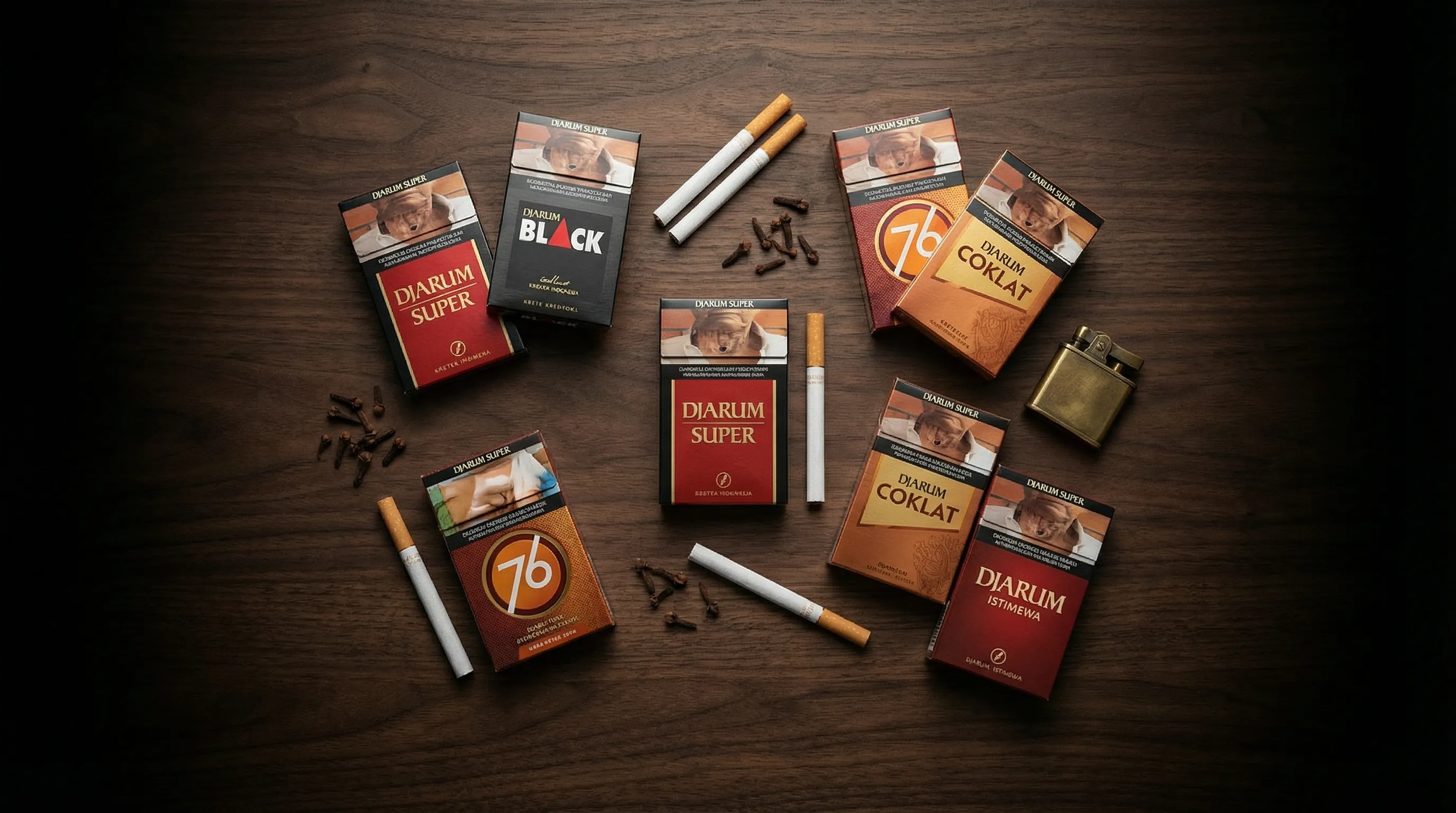
The current Djarum portfolio is a fragmented spectrum designed to navigate various legal and consumer niches. The Djarum Black remains the most globally recognized variant, embodying the "mystique" of the kretek through its ebony wrapper and gold foil stamping. However, for the connoisseur seeking a more traditional experience, the Djarum Super offers a more potent, full-flavored profile that emphasizes the quality of Javanese tobacco. In the Indonesian domestic market and specialized international circles, the Djarum Coklat line represents the heritage of the hand-rolled (SKT) tradition, utilizing aromatic Srintil tobacco and tree-matured cloves. For those seeking the pinnacle of the brand's full-flavor engineering, many enthusiasts look to Djarum Super as the definitive expression of the machine-rolled (SKM) category. Each of these products is unified by the signature "crackle"—a rhythmic snapping sound caused by fluid dynamics as pockets of clove oil flash-boil and rupture at temperatures exceeding 800°C.
Pharmacology and the Sensory Paradox
To evaluate Djarum clove products with scientific authority, one must move beyond flavor descriptions and examine the pharmacology of eugenol. Clove oil consists of 70-90% eugenol (4-allyl-2-methoxyphenol), a compound that acts as a local anesthetic by inhibiting nerve impulse conduction. This creates a "smoothness paradox" where a chemically aggressive smoke, often higher in tar and carbon monoxide yields than conventional cigarettes, feels remarkably mild or "numb" to the smoker. By suppressing the natural gag and cough reflexes, eugenol allows for deeper inhalation, which potentially facilitates faster nicotine absorption. This interaction explains the intense physical "buzz" associated with Djarum products, which is a combination of high-nicotine tobacco and the bronchodilatory effects of vaporized eugenol. However, this anesthesia also presents risks, as it masks the body's natural rejection response to foreign particulate matter, a topic often overlooked in the nostalgia-driven discussions of clove cigarettes in America in the 1990s.
The Herbal Horizon and the 2026 Shift
As we enter the 2025-2026 period, the Djarum lineup is facing an existential threat due to state-level prohibitions. In states like California, the implementation of the "Unflavored Tobacco List" (UTL) following AB 3218 effectively bans the retail sale of any flavored tobacco product, including clove-wrapped cigars. This regulatory cliff has catalyzed the "herbal pivot," represented by Djarum Bliss. Djarum Bliss is a tobacco-free and nicotine-free alternative that utilizes a blend of tea leaves, fig leaves, and tamarind to preserve the clove scent and crackle without the legal baggage of the tobacco leaf. This product is positioned as the final survival strategy for the kretek flavor profile in a prohibitionist environment. For consumers navigating these increasingly complex local restrictions, staying informed on clove cigarettes state-by-state legality is the only way to ensure access to authentic products. The era of the "legal loophole" is ending, and the industry is shifting from a game of re-categorization to a game of total substitution.
Ultimately, the history of Djarum clove products is a chronicle of adaptation. From the medicinal asthma remedies of Haji Jamhari to the Goth subcultures of the 1990s and the tobacco-free Bliss of 2026, the brand has remained resilient by prioritizing the cultural "source of truth"—the scent, the numb, and the crackle. According to the Family Smoking Prevention and Tobacco Control Act, the era of the paper-wrapped flavored cigarette has long passed, but the legacy of the Indonesian spice trade persists through innovation. For more on the deep roots of this sensory tradition, enthusiasts can explore the history of kretek to understand how a local Javanese artifact became a global icon of alternative culture. As the retail market for these specialized products reaches its twilight in 2026, the Djarum name continues to serve as the definitive repository for the kretek category’s enduring soul.